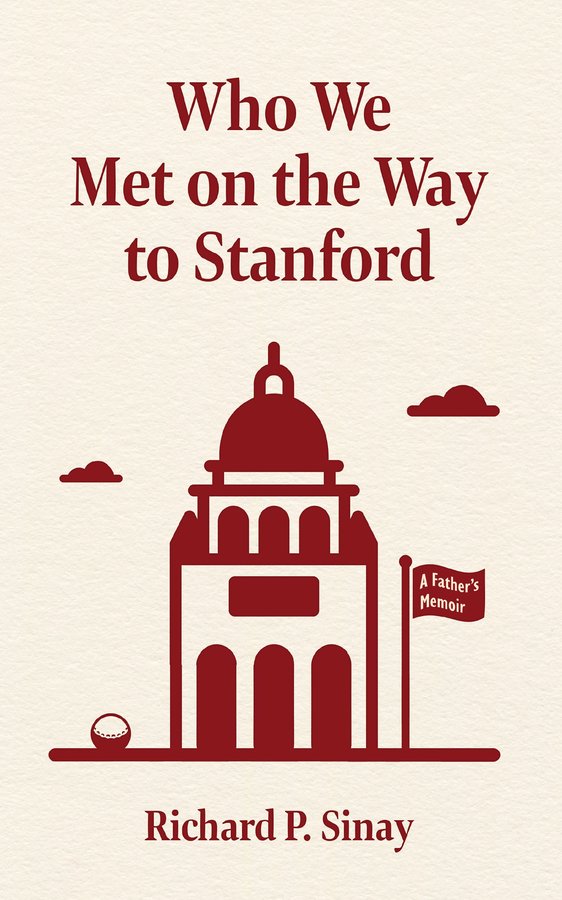
Who We Met on the Way to Stanford
by Richard P. Sinay
BEST WORLDBUILDING ECONOMY BOOKY
The judge's reasoning
Richard Sinay gives the reader the lived world of elite junior golf, and he gives it from the passenger seat. The 5 a.m. drives to Borrego Springs. The six-hour rounds at Canyon Country Club in 110-degree heat. The parents trailing a kid down a fairway while the real calculus happens in the car afterward. The chapter-by-year structure, with each chapter pairing a season with the future pros who crossed Brian's path, builds a whole ecosystem: Mike Oh and Mark O'Hair pushing their sons, Monte Hunter selling the family house for Hank Haney lessons, Marcela Reyes beside Lorena Ochoa at every tournament. The Japan Cup trips (the ohayo/Ohio joke on the tour bus, two dads hunting for dinner in Nagoya, one of them turned away by a restaurant owner still angry about Hiroshima) have the texture of lived experience, not research.
The book's real gift is its self-indictment. Sinay prints the LA Times profile in which Brian says, of the Stanford scholarship, "it's also kind of a letdown," then sets his own letters beside it, including the one begging a son who hates the game to "at least try" professionally. He calls that letter "pretty dumb." That candor, and the closing admission that "I fell off the carousel," turns a parent's grievance against Coach Mitchell into a clear-eyed study of the gap between a father's dream and a son's. The Holden Caulfield carousel frame earns its keep.
This is a book for sports parents. It will not change how Brian swings, but it might change one conversation in a car on the way to a tournament.

Judged by Arthur Beaumont — Non-Fiction · Memoir · Business · Self-Help
"A good non-fiction book changes one specific thing about your week."
Supporting passages
"We left at five in the morning to get there for the beginning of the tournament in Calabasas. We also went to tournaments in East San Diego, which involved an hour and a half of driving one way."
The unglamorous logistics of junior golf, rendered with the weariness of someone who drove every mile.
"I asked him if he liked this kind of competition and winning a major golf tournament like this. He said over his shoulder because I was a pace or two behind him, "It's okay, Dad." Just, okay? Just, okay?"
The record-breaking 65 lands as a quiet heartbreak, because the father realizes mid-triumph that he loves the game more than his son does.
"He had achieved his goal of getting the scholarship to Stanford, and that was all he cared about. The problem was that he didn't know what the responsibility was for that scholarship. If a player gets one, they must earn it to keep it."
The book's central lesson, that a goal reached without a next goal becomes a trap, is stated plainly and with the author's own share of blame.
Per-axis rubric scores
Every Booky-winning book is scored across all ten craft axes. The award category comes from the top axis; a second axis at or above 75 appears as secondary recognition.
Find out what your book does best.
Submit your book today. Get a real, honest, category-specific Booky — or every dollar back.
Submit Your Book → Screen Another Book