
vmaawad@yahoo.com
by Vanessa Maawad
BOLDEST CONCEPT BOOKY
The judge's reasoning
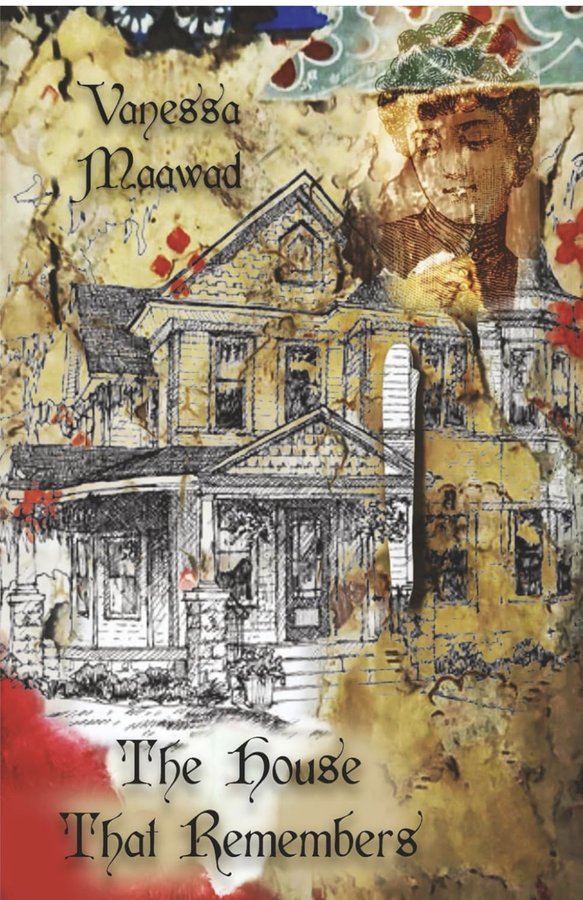
The House That Remembers earns its Booky on Originality for a structural conceit that is genuinely distinctive and consistently executed: a Cape Cod house narrates its own four-century history, each chapter a new family, the house itself the only continuous consciousness. This is not a gimmick. Maawad commits to it fully — the house thinks, grieves, absorbs, and remembers with a specificity that gives the device weight. When the house notes that electricity arrived "like a new lifeblood" and that its "old fears of fire faded," we feel an inhuman but emotionally coherent perspective. That is hard to do and worth naming.
On Plot & Structure, the episodic architecture is more controlled than it first appears. Each chapter family arrives carrying a distinct historical wound — Puritan grief, colonial ambition, epidemic, Salem-era suspicion — and Maawad shapes each mini-narrative around a rupture: John Hathaway's violence in the clearing, Thomas Wilkerson's departure through the door, the Lawson twins' deaths. These ruptures accumulate. The house accretes sorrow the way real old houses accrete repair, and the chapter-by-chapter form enacts the book's thesis rather than merely stating it. The Hathaway chapter is the strongest of the three provided: Martha's arc from dutiful daughter to silent witness to fever death is compressed but emotionally legible, and the lavender detail — clutched, then odorless — is the book's best image so far.

Judged by Eleanor "Nell" Whitcombe — Literary Fiction · Prose & Style
"A sentence either earns its breath or it doesn’t."
Supporting passages
"I have no ears, yet I heard everything. The scrape of wooden benches against my floors, the soft sighs of children drifting to sleep, wrapped in blankets against the cold, and the desperate prayers of weary mothers watching the flames and thinking of the home they left behind across the sea or the chance for a new beginning they clung to with hope."
The house-narrator voice earns its unusual vantage here — sensory and specific, not merely metaphorical — establishing the device's emotional credibility early.
"Martha clutched the lavender tighter, her fingers pressing into the stalks as she watched the scene unfold... Slowly, she turned and returned to the house, the lavender still clutched in her hands, though she could no longer feel its softness, just as its scent had suddenly faded from the air."
The lavender functions as a clean structural and emotional pivot — the loss of sensation marks the precise moment Martha's childhood ends, giving the chapter's tragedy a sensory anchor rather than only a reported one.
"Ruth buried her family behind me, each grave marked with a simple wooden cross. I watched as she dug into the frozen earth, her frail body shaking with the effort. The wind howled around us, biting and merciless, but Ruth did not pause."
The house as helpless witness to Ruth's solitary grave-digging concentrates the Lawson chapter's grief into a single sustained image that lands without sentimentality.
Per-axis rubric scores
Every Booky-winning book is scored across all ten craft axes. The award category comes from the top axis; a second axis at or above 75 appears as secondary recognition.
Find out what your book does best.
Submit your book today. Get a real, honest, category-specific Booky — or every dollar back.
Submit Your Book → Screen Another Book