
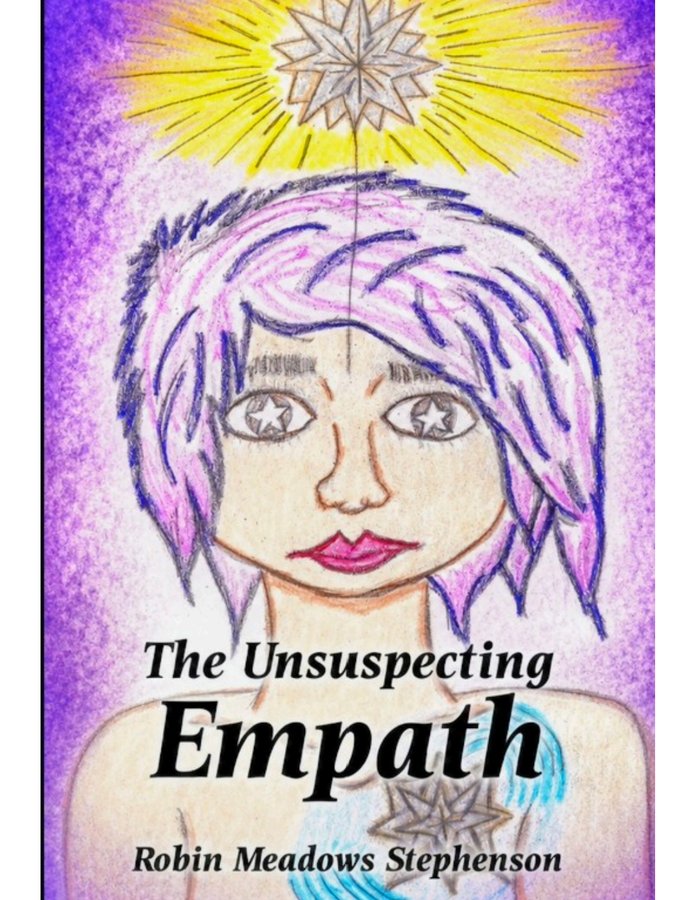
The Unsuspecting Empath
by Robin Meadows Stephenson
MOST AFFECTING ENDING BOOKY
The judge's reasoning
Stephenson's strongest move is refusing to soften the material once she opens the door to it. The empath framing could easily have stayed abstract and self-congratulatory, but she keeps grounding it in specific, hard-to-forget bodily facts: headaches that cost her school hours, a stomach that 'gets sick over everything,' and — most viscerally — the bus. The line 'Being a female student on the bus meant being sexually assaulted so often that it became normalized, which is a horrifying sentence to write, but it is true' is the book's best sentence precisely because she doesn't dress it up. She follows it with the detail of clutching textbooks to her chest as makeshift armor, and it lands as reportage, not melodrama.
That same commitment to specificity gives the memoir its lived-in sense of place and period. The desegregation-era school — restrooms denied by ethnicity, switchblade threats, a police officer's daughter targeted for her father's job — reads like an actual 1970s West Texas childhood rather than a generic 'hard upbringing.' These aren't empath anecdotes; they're social history rendered through one kid's body, and they're what keep the book from floating into New Age abstraction.
The empath conceit itself is over-explained (the same qualifiers — 'I am not saying I'm a guru' — recur so often they start to feel like padding), and dialogue is nearly absent. But the raw material of the childhood — the bus, the pins, the mother's illness she was terrified of inheriting — earns its emotional weight honestly, which is the harder thing to fake.

Judged by Arthur Beaumont — Non-Fiction · Memoir · Business · Self-Help
"A good non-fiction book changes one specific thing about your week."
Supporting passages
"Being a female student on the bus meant being sexually assaulted so often that it became normalized, which is a horrifying sentence to write, but it is true."
A moment where the memoir drops its self-help scaffolding and lets a hard fact stand alone, which is where the book is most affecting.
"I was getting urinary infections because the Mexican girls would not let the white girls use the restrooms. Girls were meeting us with switchblades and threatening our lives."
Specific, unromanticized period and place detail that grounds the memoir in a real, textured social world rather than generic hardship.
"It gave me something I wish I had possessed all along: language. Language matters. Once you can name a thing, you can begin to understand it."
States the book's practical thesis plainly — naming as the first tool of self-management — which anchors the later coping-strategy chapters.
Per-axis rubric scores
Every Booky-winning book is scored across all ten craft axes. The award category comes from the top axis; a second axis at or above 75 appears as secondary recognition.
Find out what your book does best.
Submit your book today. Get a real, honest, category-specific Booky — or every dollar back.
Submit Your Book → Screen Another Book