
The Unity Manifesto
by Richard Ravenbrook
MOST IMPORTANT CONVERSATION BOOKY
Takes you to this book's Amazon page.
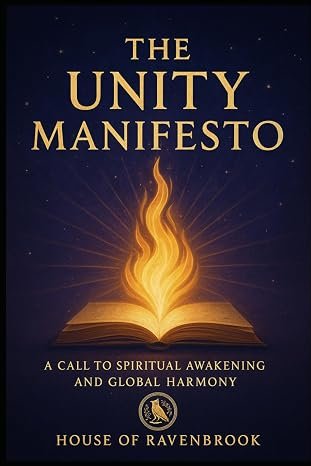
The judge's reasoning
The Unity Manifesto stakes out an earnest, sweeping argument: that the root cause of human division — tribalism, colonial exploitation, fear-amplified prejudice, structural greed — is both historically traceable and spiritually reversible, and that the cure begins in individual consciousness before radiating outward. That is a real argument, not merely a cluster of uplifting vibes, and it earns the book its primary recognition on Theme & Substance.
Ravenbrook is at his most substantive when he moves from the abstract to the concrete: the coffee-bean supply chain passage in Chapter 3 is the book's sharpest moment of intellectual specificity, tracing a single commodity through farmer, harvester, trader, roaster, and barista to illustrate global interdependence without resorting to jargon. Similarly, the section on deforestation's cascading effects — habitat loss triggering food-chain disruption, triggering carbon imbalance, triggering climate displacement — demonstrates that the author can build a logical chain and follow it to its end.
The book's Genre Execution earns a nod because Ravenbrook delivers what self-help readers come for: diagnosis, framework, and a short list of practical steps (mindfulness, journaling, acts of kindness, forgiveness, gratitude). These are not novel prescriptions, but they are clearly organized and accessible, and the genre rewards clarity over novelty at this level.
The book's weaknesses are real: the prose cycles through elevated abstractions without grounding them in personal narrative or case study long enough to let them breathe, and the repetition of phrases like "inherent divinity," "shared humanity," and "us versus them" dulls their impact by the third chapter. A tighter editorial hand and more memoir-level specificity — one person's story, not just humanity's arc — would have given this considerable more force.

Judged by Arthur Beaumont — Non-Fiction · Memoir · Business · Self-Help
"A good non-fiction book changes one specific thing about your week."
Supporting passages
"Imagine the journey of a single coffee bean, from its origins in a remote mountain region to its eventual consumption in a bustling city. The farmer who cultivates the beans, the workers who harvest and process them, the traders who transport them across oceans, the roasters who prepare them for consumption, and the baristas who serve them to customers, all play a vital role in its journey."
This is the book's most effective argumentative move — grounding the abstract claim of global interconnectedness in a tangible, traceable object that any reader has held in their hand.
"Practice mindfulness: By paying attention to our thoughts and emotions without judgment, we can begin to understand the root causes of our reactions. Mindfulness enables us to respond with greater awareness and compassion, rather than reacting impulsively out of habit or fear."
The practical-steps section demonstrates the book fulfilling its self-help contract: concrete, actionable guidance that gives the reader something to do before the next chapter.
Per-axis rubric scores
Every Booky-winning book is scored across all ten craft axes. The award category comes from the top axis; a second axis at or above 75 appears as secondary recognition.
Find out what your book does best.
Submit your book today. Get a real, honest, category-specific Booky — or every dollar back.
Submit Your Book → Screen Another Book