
THE ALTAR OF AUTHORITY
by RALPH GOOD
MOST PERSUASIVE CASE BOOKY
Takes you to this book's Amazon page.
The judge's reasoning
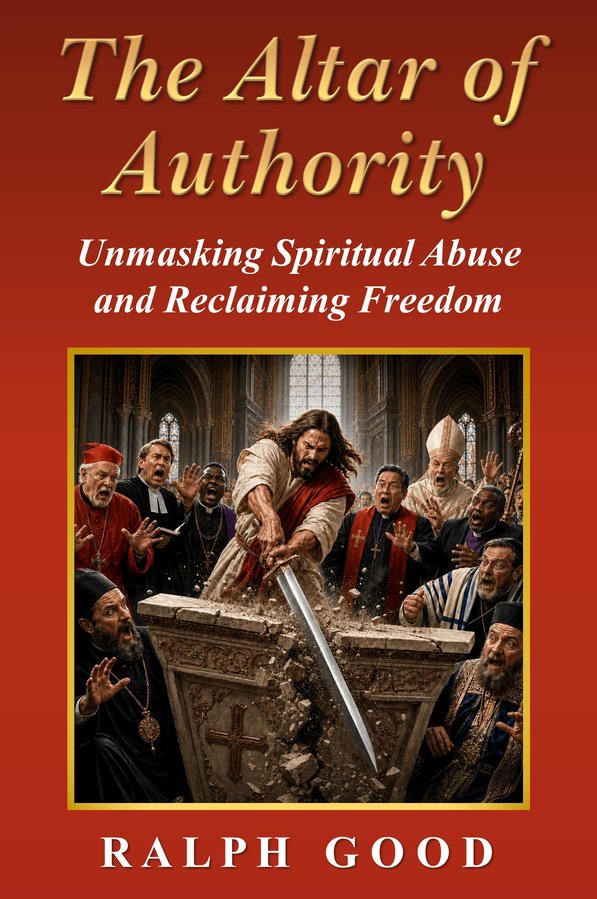
The Altar of Authority does something genuinely difficult: it turns personal trauma into a theological argument, and it earns both. Ralph Good is not simply venting about bad church experiences — he is building a case. The book's central claim, that the doctrine "all authority comes from God" has been weaponized to produce spiritual abuse, is specific, falsifiable, and backed by a methodical walk through Greek lexical study, biblical narrative, and lived consequence. That is a real argument, not a cluster of vibes.
The memoir sections carry the argument's weight honestly. The elder's handshake scene — where a church leader "unexpectedly and forcefully yanked my hand downward with all the strength he could muster" — is the book's emotional and theological fulcrum in one physical gesture. Good understands that doctrine lands in bodies, and he shows us exactly where and how. The suicide attempt is rendered with restraint rather than melodrama: the pills, the unseen hand at his throat, the collapse to the floor. It does not perform suffering; it reports it, which is the harder and more credible choice.
The pivot from personal narrative to scriptural exegesis in Part 2 is where the book will divide readers — some will find the lexical appendices invaluable, others will feel the seam — but the transition is purposeful. The Holman Bible Dictionary definition of "fear of God" arrives at exactly the right moment, reframing the book's central wound as a theological misreading with a correctable answer. That structural choice — wound, then diagnosis, then remedy — is the mark of a writer who knows what he is trying to change in his reader's week.

Judged by Arthur Beaumont — Non-Fiction · Memoir · Business · Self-Help
"A good non-fiction book changes one specific thing about your week."
Supporting passages
"He wielded fear like a weapon, cloaking it in the guise of divine authority. This created a jarring conflict within my spirit; I was torn between the fundamental belief that God is love and the unsettling reality that fear was being used to pressure me into complying with someone else's agenda."
This sentence crystallizes the book's central theological argument — that institutional fear-manipulation and genuine reverence for God are opposites, not synonyms — in terms that are both personally rooted and doctrinally precise.
"The handshake was anything but friendly... he unexpectedly and forcefully yanked my hand downward with all the strength he could muster. Since my accident, I had consistently resisted his attempts to reassert dominance, but he could no longer accept my defiance. He demanded that I acknowledge his authority to dictate the course of my life. The intensity of his grip was so overwhelming that it felt as if my very heart were being wrenched from my chest."
Good locates spiritual abuse in a specific physical act, making the abstract coercion of "authority" tangible and undeniable — this is memoir craft at its most effective.
"Suddenly, as if emerging from the deep darkness of despair, I received a powerful and life-changing revelation directly from God: 'It was not me!' The words, coming from the Holy Spirit dwelling deep within my soul, vibrated with such intensity that they left me momentarily speechless."
This moment delivers exactly what the spiritual-memoir genre promises — a turning point that is both theologically coherent and experientially visceral, grounding the book's liberating argument in a personal encounter rather than abstract doctrine.
Per-axis rubric scores
Every Booky-winning book is scored across all ten craft axes. The award category comes from the top axis; a second axis at or above 75 appears as secondary recognition.
Find out what your book does best.
Submit your book today. Get a real, honest, category-specific Booky — or every dollar back.
Submit Your Book → Screen Another Book