
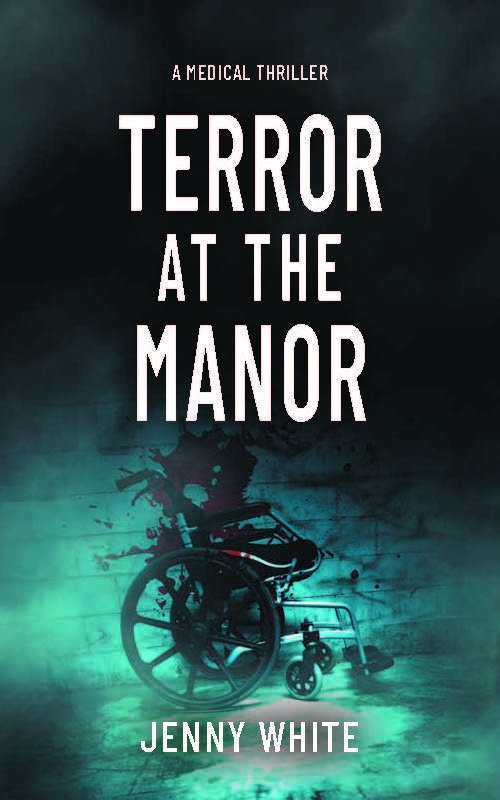
Terror at the Manor
by Jenny White
BEST TREATMENT OF FAMILY BOOKY
The judge's reasoning
White writes from real professional ground, and it shows exactly where it matters: not in the prose polish but in the moral weight of the material. The opening death of Mr. Billings is grim, but it's Abbey's reaction — her gut cramping like it did post-ICU-surgery, her forcing her bowels to relax while she silently asks What could I have done differently? — that reveals a writer who has actually stood in that hallway and knows what institutional guilt feels like from the inside. That authenticity carries through Larry's long, unflinching meditation on his grandparents' 'warehouse of impending death,' the renaming of nursing homes to 'long-term care' as 'putting lipstick on a pig,' and his blunt question: Was there quality of life for the residents? Did anyone care? This isn't decoration — it's the book's actual argument, and it's delivered with conviction earned by someone who clearly knows the regulatory binders, the PSW/RN hierarchy, and the funding-formula politics that keep beds full regardless of safety.
The hook built on top of that substance is genuinely marketable: a traumatized ex-war-correspondent going undercover as a fake dementia patient inside the very ward where a murder occurred, chaperoned by a councilor's wife posing as his sister. It's a clean, high-concept premise — Trojan Horse thriller meets elder-care exposé — that a jacket copywriter could sell in one sentence. The city-council bureaucracy scenes drag the pacing, and the dialogue too often explains itself rather than living, but the underlying social indictment and the cleverness of the infiltration device are real strengths that will land with readers who came for a thriller with a conscience.

Judged by Marcus Thorne — Thriller · Mystery · Suspense · Commercial Fiction
"Plot is promises kept."
Supporting passages
"Ontario eventually changed the name “nursing homes” to “long-term care homes,” as if changing the name changed the philosophy or purpose. It at least made them less intimidating, less scary. It was like putting lipstick on a pig, he thought."
A sharp, earned piece of social commentary that reveals the book's real engine: institutional critique from someone who clearly knows the system.
"What do you think about planting someone into the home, say a retired professional investigative journalist, who can live there as a resident but be working for us as the owner? He or she would have the necessary skills to watch, learn, investigate, and report back."
A clean, high-concept infiltration premise that gives the whole book a marketable one-line pitch.
"The rooms were dark, and they weren’t private. They were wards where many people slept together. There was no privacy, no activities, no joy. It was just a place to come to die."
The procedural and institutional detail throughout the manuscript gives the setting a lived-in, professionally informed texture.
Per-axis rubric scores
Every Booky-winning book is scored across all ten craft axes. The award category comes from the top axis; a second axis at or above 75 appears as secondary recognition.
Find out what your book does best.
Submit your book today. Get a real, honest, category-specific Booky — or every dollar back.
Submit Your Book → Screen Another Book