
Pitch Black: The best Black ads of the past 50+ years
by Mark S. Robinson
MOST IMPORTANT CONVERSATION BOOKY
Takes you to this book's Amazon page.
The judge's reasoning
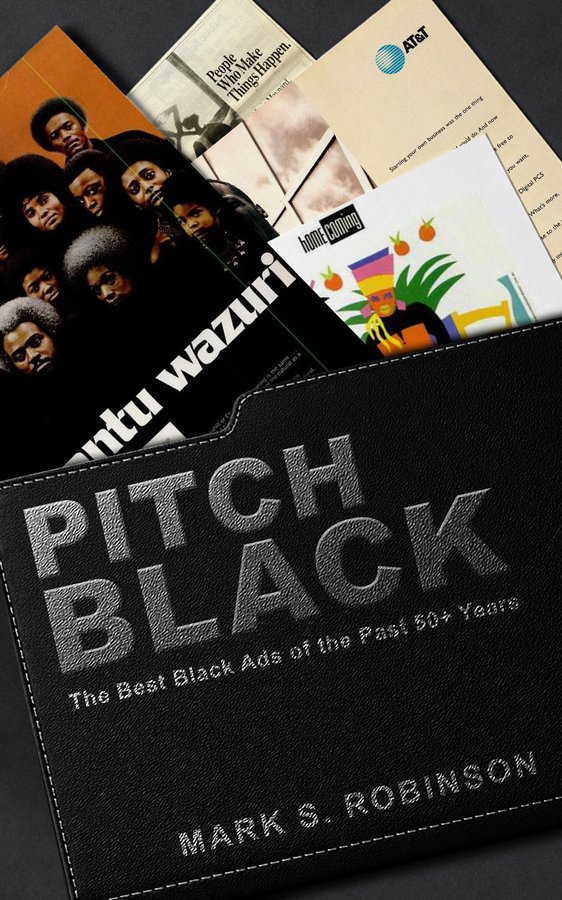
Robinson has found a genuine, previously undocumented archive and built a real argument around it, not just a nostalgia gallery. The refrain that structures the book — 'the advertising was not created by us, and it was not created for us' — earns its repetition because he keeps returning to it with new, specific evidence: the Boston News-Letter's 1704 slave-sale ad running six weeks after the paper's founding, the Gold Dust Twins' 60-year run, the Ona Judge reward notice placed by George Washington himself. That's argument-building through primary sources, not vibes.
The Edward Boyd/Walter Mack section is the book's engine, and it's where the Theme & Substance case is made hardest. Mack's line at the Waldorf Astoria — 'We don't want it to become known as the nigger drink' — followed by Boyd standing and walking out, is a scene with real moral weight, and Robinson doesn't soften it or rush past it to a redemptive bow. He lets the ugliness sit next to the genuine historical achievement (Boyd building the first Black sales force, the first ad treating Black consumers as aspirational) without resolving the tension. That's a mature choice for a book that could have easily flattened into hagiography.
The Taschen anecdote — buying the 714-page 'Mid-Century Ads' and counting exactly ten Black ads, 1.4% — is the book's clearest thesis statement, and it's more persuasive than any polemic because it's just arithmetic. Robinson has built the corrective archive he went looking for and couldn't find, and that's a substantive contribution, not a coffee-table gimmick.

Judged by Arthur Beaumont — Non-Fiction · Memoir · Business · Self-Help
"A good non-fiction book changes one specific thing about your week."
Supporting passages
"The advertising was not created by us, and it was not created for us, but we were always in advertising."
The refrain that anchors the book's central argument about erasure and authorship.
"I purchased a copy of “ Mid-Century Ads ” by Taschen. Its 714 pages claim to be the most influential ads from the 1950s and 1960s... There were ten. 1.4%."
A concrete, quantified gap that justifies the book's existence better than any framing statement could.
"Upon hearing Walter Mack’s words, Edward Boyd, who was present at the meeting, stood up and slowly marched out of the hotel ballroom in protest."
A single unadorned action that captures Boyd's dignity and the limits of the alliance he'd built his career on.
Per-axis rubric scores
Every Booky-winning book is scored across all ten craft axes. The award category comes from the top axis; a second axis at or above 75 appears as secondary recognition.
Find out what your book does best.
Submit your book today. Get a real, honest, category-specific Booky — or every dollar back.
Submit Your Book → Screen Another Book