
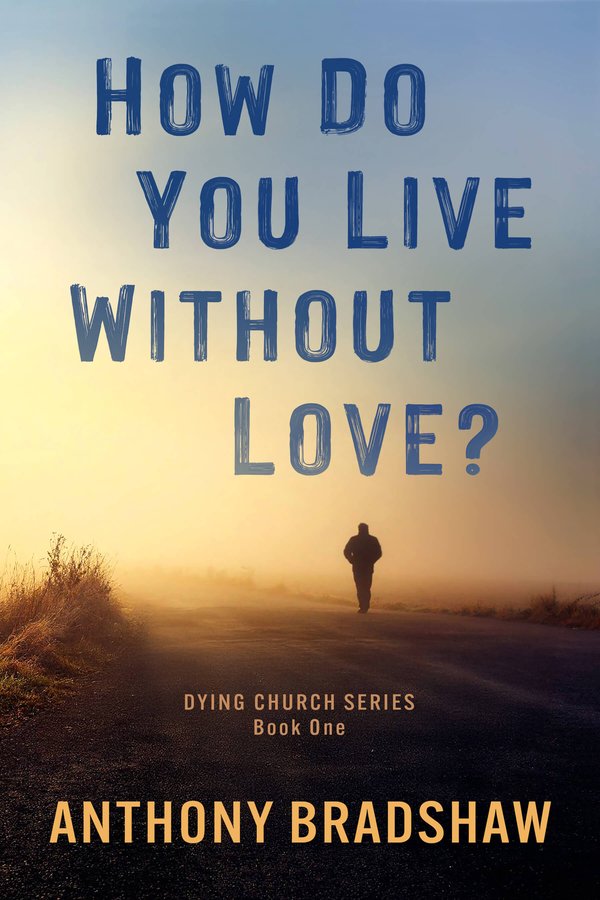
How Do You Live Without Love?
by anthony bradshaw (Tony)
BEST OUTSIDER PROTAGONIST BOOKY
The judge's reasoning
What Bradshaw does best in these opening chapters is let Wesley reveal himself sideways — through action and banter rather than exposition — and the strategy pays off. The balloon-catching bit on the Asheville sidewalk establishes his instinctive tenderness before we know anything else about him; three pages later we get the photographs on the nightstand and the pistol clattering into the drawer, and the earlier warmth suddenly reads as armor. That's a real structural choice, not an accident.
The strongest single scene is the wordless free-throw session with Thad. Wesley never announces he's a minister, never performs concern — he just rebounds the ball and lets the kid's anger burn itself out. The payoff comes later, almost thrown away, when Wesley asks about Thad's breakfast cereal and answers his own question with 'The foster homes I lived in only got us the basics... We didn't get fancy cereals like Monster Crunch.' It's the first time we learn Wesley was a foster kid himself, and it arrives disguised as small talk about Monster Crunch — exactly the kind of restraint the rest of the book doesn't always manage, but which lands hard here.
The church-committee scenes work similarly well: Doc Kirby's needling ('Damn well better not be any fried chicken, not with your cholesterol, young man'), Paul Young's 'meaty hand' bonhomie, Ruth's silent hostility — these are recognizable small-town-church types rendered with enough specific detail (Ruth's brother lobbying for the job, the biddies naming 'life' as what the church needs) that they escape caricature. The dialogue has real regional ear and comic timing, even when the prose around it is uneven.

Judged by Eleanor "Nell" Whitcombe — Literary Fiction · Prose & Style
"A sentence either earns its breath or it doesn’t."
Supporting passages
"The foster homes I lived in only got us the basics. Plain cereal. Oaties. That sort of thing. We didn’t get fancy cereals like Monster Crunch."
Wesley's own hard backstory surfaces sideways, through a joke about cereal, rather than through exposition — earned characterization.
""If mama ain't happy; ain't nobody happy." "Whatever his wife tells him to do," offered unidentified voices."
The overlapping, half-identified church-committee banter gives the ensemble a lived-in, communal voice without slowing the scene down.
"Wesley kissed the photo of his wife and then the one of his daughter."
A restrained, unsentimental beat that lets Wesley's grief register without melodrama.
Per-axis rubric scores
Every Booky-winning book is scored across all ten craft axes. The award category comes from the top axis; a second axis at or above 75 appears as secondary recognition.
Find out what your book does best.
Submit your book today. Get a real, honest, category-specific Booky — or every dollar back.
Submit Your Book → Screen Another Book