
Gutter Road
by Marc Neuffer
MOST ATMOSPHERIC SETTING BOOKY
Takes you to this book's Amazon page.
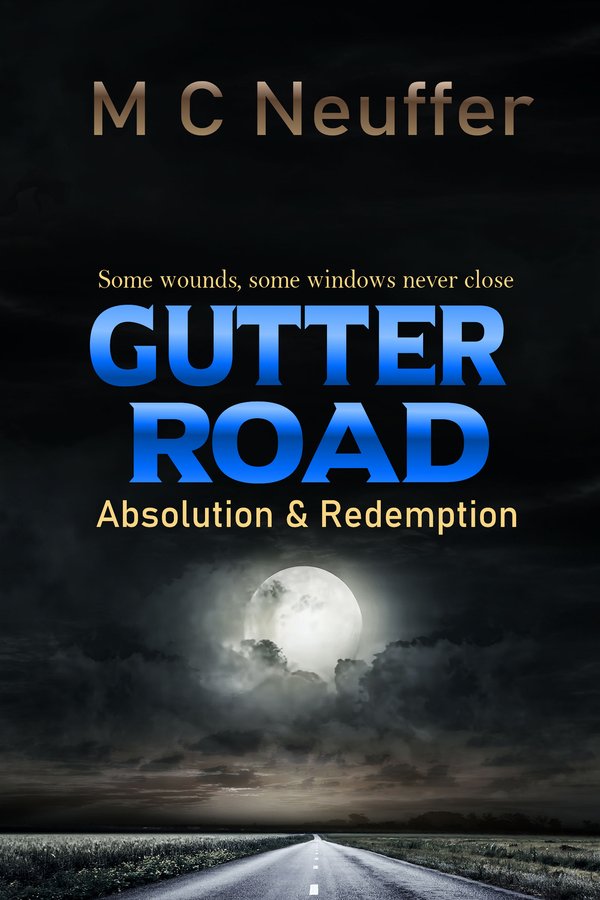
The judge's reasoning
Neuffer knows this world down to the asbestos-wrapped exhaust pipe and the rock-salt shotgun shells, and it shows in the texture rather than the exposition. Gutter's is built through accumulation — the plywood patch on the ceiling, the hand-lettered sign that forgot to say 'no guns,' the coffee-can bank hidden next to a revolver in the closet — and these details do double duty, grounding the postwar biker-club milieu while quietly indicting the domestic economy underneath it. The Aachen flashback earns its place too; the porcelain doll under the child's bed and the canned peaches shared by the Professor aren't decoration, they're the hinge the whole book turns on, explaining why Connor edge-walks through his own life the way he once edge-walked through that town.
The dialogue is the second strength, and it's doing real characterization work. Gilmore's Hollister-riot rant, Delacruz's flat battlefield instructions ('If you move, you'll just get another bullet'), Jenette's interrogation of Kathy — cigarette held an inch above the girl's forearm — all land because the syntax shifts person to person. Jenette's line to Betty, 'Men need training,' has the crack of real folk wisdom, and her negotiation with Kathy shows a woman running her own quiet war council parallel to the men's.
The prose occasionally over-explains its metaphors (the 'edges' motif gets stated more than once), and some scenes lean on research detail past what character interiority needs. But the sentence-level control in the war sequences — 'He tasted grit, breathed air full of suspended brick dust' — earns its breath. This is a book that knows its ground and walks it convincingly.

Judged by Eleanor "Nell" Whitcombe — Literary Fiction · Prose & Style
"A sentence either earns its breath or it doesn’t."
Supporting passages
"Like the new sign, everything was slanted at Gutter's, presented askew. Nothing came at you straight on."
A physical detail of the bar becomes the governing metaphor for the whole postwar-veteran subculture without announcing itself as one.
""You don't get any older than dead.""
Walker's line does the work of a paragraph of characterization in five words, and shows the book's ear for battlefield vernacular.
"A ribbon-tied blonde pigtail lay on the floor next to her. Cut off, close to her scalp."
The fragment lands the horror without adjectival padding, letting the image carry the weight.
Per-axis rubric scores
Every Booky-winning book is scored across all ten craft axes. The award category comes from the top axis; a second axis at or above 75 appears as secondary recognition.
Find out what your book does best.
Submit your book today. Get a real, honest, category-specific Booky — or every dollar back.
Submit Your Book → Screen Another Book