
Executive Roadkill
by Michael A. Sisti
MOST ATMOSPHERIC SETTING BOOKY
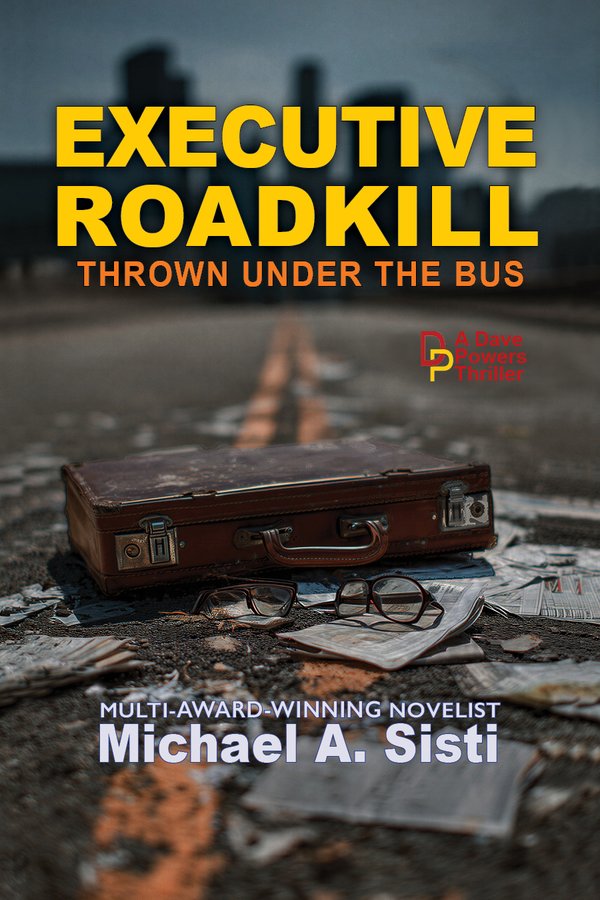
The judge's reasoning
Sisti's real strength here is the granular, lived-in texture of corporate bureaucracy — not a thriller's usual world (docks, precincts, war rooms) but cubicles, purchasing departments, and printing procurement, rendered with the specificity of someone who actually sat through those meetings. The dot-structure showdown with the printer Tim Spears, where Dave pulls out a loupe and says "I know my dots, and your dots are not good dots," is a small, satisfying set piece — a workplace power play staged like a heist. The Landrieu pharmacy-bag scheme and the prologue's backroom martini deal between Jack and Phil Lyons plant a slow-burn corruption plot that promises a corporate-thriller payoff, and the framing device (this is "based on actual events") gives the insider details — RIHIP's market collapse from 85% to 49%, the silo warfare between Marketing and Purchasing — real texture that readers who've worked in corporate America will recognize, as the blurbs from actual businesspeople attest.
Where the book currently under-delivers for the thriller/suspense category specifically is pacing and tension: these opening chapters read as workplace-satire episodes (email jokes, golf outings, water-cooler banter) rather than a mounting thriller engine. The prologue's ominous handshake deal is the genre hook, but chapters 1-20 mostly detour into Dave's professional triumphs before that thread resurfaces. Still, the corporate-conspiracy scaffolding — legislators, lobbyists, kickback schemes, an executive on the rise who doesn't yet see the trap closing — is a legitimate, well-observed setup, and the world it builds is distinctive enough to earn recognition.

Judged by Marcus Thorne — Thriller · Mystery · Suspense · Commercial Fiction
"Plot is promises kept."
Supporting passages
"Take a look at the dot structure and the ink coverage and tell me you still think the problem is the photography we supplied. I know my dots, and your dots are not good dots."
A hyper-specific procurement detail turned into a genuine power move, grounding the corporate world in real texture.
"People with hubris make up their own rules and spin convention to fit their personal needs."
The epigraph sets the book's thematic spine — ambition and downfall — that the prologue's backroom deal is built to dramatize.
Per-axis rubric scores
Every Booky-winning book is scored across all ten craft axes. The award category comes from the top axis; a second axis at or above 75 appears as secondary recognition.
Find out what your book does best.
Submit your book today. Get a real, honest, category-specific Booky — or every dollar back.
Submit Your Book → Screen Another Book