
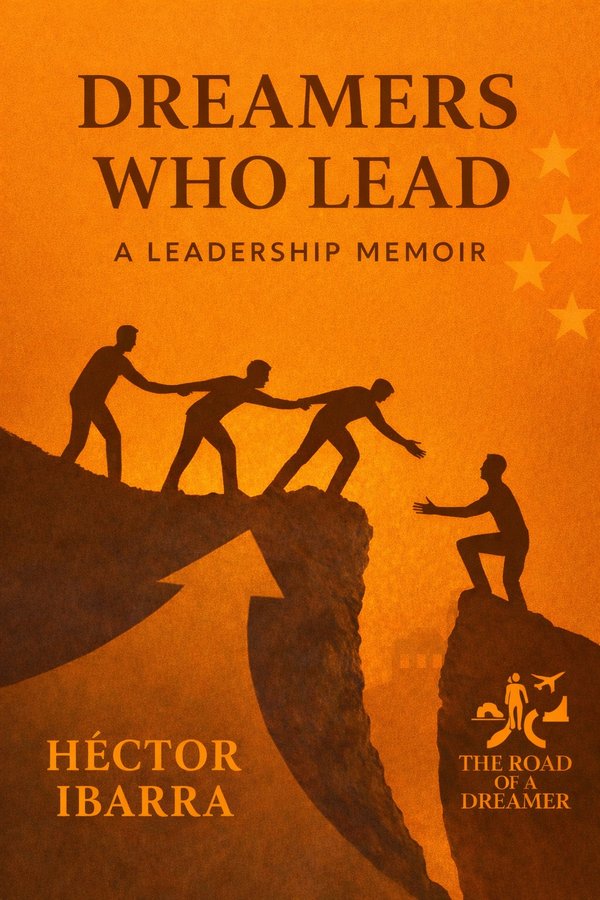
Dreamers Who Lead: A Leadership memoir
by Hector A Ibarra
BEST TREATMENT OF EMOTION BOOKY
The judge's reasoning
Dreamers Who Lead earns its Booky on Theme & Substance because Ibarra consistently converts shop-floor experience into transferable, specific principle — not motivational abstraction. The argument that runs through the first act is quietly radical: safety, quality, and productivity are not goals but symptoms of a correctly built system. That reframe is stated plainly in Chapter 3 — "Productivity is not the goal, it's the outcome" — and then demonstrated backward through the preceding chapters, giving the book an argument structure that accumulates rather than repeats.
The strongest passages are the ones where the lesson costs something. The piece-rate chapter doesn't just describe a flawed incentive model; Ibarra names the moral dimension directly: "Was it unethical? In my opinion, yes. But was it predictable based on how the bonus plan was structured? Also, yes." That double accountability — for the system and the people who designed it — is the mark of a practitioner who has thought hard about cause, not just blame.
On Genre Execution, the book delivers exactly what its target reader — the mid-career engineer eyeing a first management role — came for: chapter-opening epigrams that double as mental anchors, toolkits that are honestly labeled as starting points rather than recipes, and end-of-chapter reflections with concrete weekly challenges. The crab-can parable in Chapter 6 is a teachable moment that readers will repeat in their own staff meetings. The coffin-in-the-safety-training story (safety manager Karina Rodriguez, the hired actors, the workers who wept) is the book's best scene: specific, verifiable in feel, and impossible to forget. That's the difference between a leadership book and a leadership memoir, and Ibarra knows which one he's writing.

Judged by Arthur Beaumont — Non-Fiction · Memoir · Business · Self-Help
"A good non-fiction book changes one specific thing about your week."
Supporting passages
"Was it unethical? In my opinion, yes. But was it predictable based on how the bonus plan was structured? Also, yes. That experience taught me a valuable lesson: you get what you measure—and what you reward."
This sentence earns its claim by refusing to let either the leader or the system off the hook — the dual accountability is the whole argument of Chapter 3 compressed to two lines.
"We set up a special meeting room with real photos of workplace injuries. At the center there was a coffin. Inside, a volunteer employee played the role of the deceased. We hired actors: a priest, a mother, and a wife. They wept, cried out, and asked the employees why they didn't protect him — why they didn't look out for each other."
This scene does what a leadership memoir must: it renders an abstract principle (safety culture) as a visceral, specific memory that the reader can picture and borrow.
"I remember calling his wife to explain what happened. She rushed in, panicked and in tears. That moment stayed with me."
Four short sentences that land the human cost of a safety failure harder than any statistic — the restraint of the telling is what makes it stick.
Per-axis rubric scores
Every Booky-winning book is scored across all ten craft axes. The award category comes from the top axis; a second axis at or above 75 appears as secondary recognition.
Find out what your book does best.
Submit your book today. Get a real, honest, category-specific Booky — or every dollar back.
Submit Your Book → Screen Another Book