
BookyAwards · 2026
Confessions of an English Teacher Book 7
by Richard Sinay
Best Treatment of Class Booky
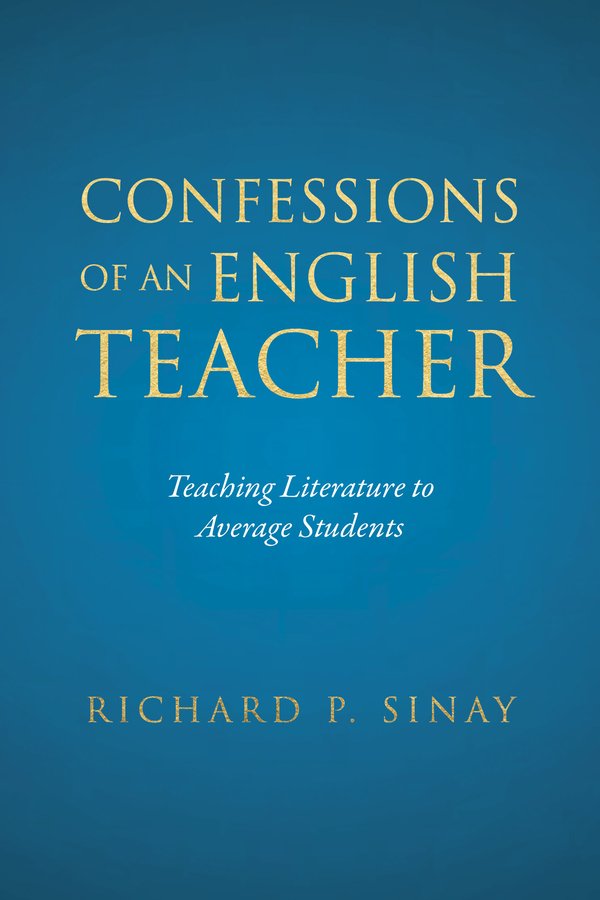
The citation
The judge's reasoning
This is a book with a mission, and Sinay never lets the reader lose sight of it. Across twenty-four chapters he argues one clear proposition: that average and below-average students are being failed by one-size-fits-all textbooks, and that literacy grows fastest through what he calls the Step-Ladder Approach, reading just above a student's instructional level and drawn from their own culture. That argument is built from thirty-seven years in the classroom, and it shows.
The book's most persuasive material is autobiographical. Chapter 7 lists all thirty-two assigned works from his own 1962–66 high school years and then dismantles them, observing that apart from The Pearl every one sat above a ninth grader's reading level. The comic anecdote of the English teacher assigned to teach Chemistry, who read a novel while a sophomore read the textbook aloud, is exactly the kind of lived evidence that makes an argument stick. So is the confession in Chapter 5, where he admits he gave students a flattering justification for reading The Scarlet Letter while knowing it was out of their reach.
The practical chapters deliver on the promise. The Catcher in the Rye thesis-building walkthrough, the Blake "Lamb"/"Tyger" lesson (complete with the "Who's your daddy?" classroom laugh), and the insistence that a Shakespeare play take weeks rather than a semester are concrete enough for a working teacher to use Monday morning. The culturally organized reading lists in Chapters 19–23 extend the thesis into usable curricula.
The book repeats itself and some chapters are loosely edited, but its conviction, specificity and usefulness to its intended reader earn this recognition for substance.
From the book
Supporting passages
"Aside from the book The Pearl by John Steinbeck, every one of these novels is above the reading level of a freshman reading at 9.0 or the ninth-grade level."
"I would jokingly add that the speaker is asking an important question: “Who’s your daddy?” This remark drew howls of laughter because the students used that phrase during the social time when I was teaching the poem."
"When the curriculum is the standard classics of dead European men, it sends a subconscious message to a diverse student body. It says that “your story isn’t a part of the important human narrative.”"
The scorecard
Per-axis rubric scores
Every Booky-winning book is scored across all ten craft axes. The award category comes from the top axis; a second axis at or above 75 appears as secondary recognition.
- Prose & Style 66
- Characterization 72
- Dialogue 64
- Plot & Structure 73
- World-Building 76
- Originality 76
- Emotional Resonance 70
- Theme & Substance AWARDED 82
- Genre Execution SECONDARY RECOGNITION 80
- Marketability & Hook 79
Scores out of 100
Find out what your book does best.
Submit your book today. Get a real, honest, category-specific Booky — or every dollar back.
