BookyAwards · 2026
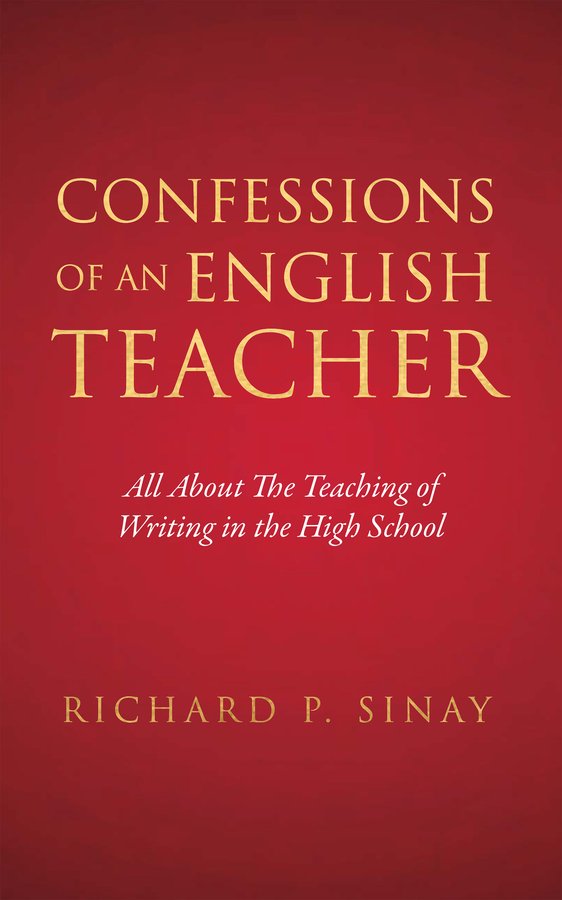
Confessions of an English Teacher Book 4
by Richard Sinay
Most Resonant Message Booky
The citation
The judge's reasoning
Sinay's book makes a single argument, and he makes it from a lifetime in the room: English teachers are trained to read literature and are never taught to teach writing. The evidence is specific. The graduate Hemingway seminar is the clearest case. A professor who can recognize a good thesis cannot explain how to build one, so he confirms Sinay's paper as right and teaches him nothing about how it was made. That one scene carries the diagnosis for the whole book. He shows the same gap again in a college literature course that required six essays on six plays without ever explaining how to write about a play.
The book is stronger for being anchored in particulars rather than abstractions. The department meeting where fifteen teachers graded one student essay and produced everything from an A to an F is memorable. The "F" came from a teacher who judged the paper "too pretentious" despite its flawless mechanics. The senior poetry-comparison paper that consumed a full semester, and the standoff that ended with Sinay in the principal's office, give the argument real stakes. The practical chapters earn their place too. Teaching grammar inside student writing is backed by Hillocks's meta-analysis and Patricia Dunn's essay. The COLM rubric (content, organization, language, mechanics) is a simple tool any teacher could use tomorrow. His daughter's line at four, "Dad, that's the way it is when I read it," says more about reading and writing than a page of theory.
This is advocacy from a veteran with a grievance, and its conviction is its main strength. It is a useful, candid book for new English teachers and department chairs who want to know what the job actually involves.
From the book
Supporting passages
"He did not teach me anything about writing the paper, but only confirmed that I had done it correctly."
"Teaching writing is coaxing the students through the process of writing a paper. That is what teaching writing is."
"The "Confession" I want to make to the general public is that English teachers are not trained to teach writing at the high school level."
The scorecard
Per-axis rubric scores
Every Booky-winning book is scored across all ten craft axes. The award category comes from the top axis; a second axis at or above 75 appears as secondary recognition.
- Prose & Style 66
- Characterization 70
- Dialogue 62
- Plot & Structure 66
- World-Building 76
- Originality 74
- Emotional Resonance 68
- Theme & Substance AWARDED 80
- Genre Execution SECONDARY RECOGNITION 79
- Marketability & Hook 77
Scores out of 100
Find out what your book does best.
Submit your book today. Get a real, honest, category-specific Booky — or every dollar back.
